A Colorado River Sized Responsibility
A professional development CE Class that amounts to something more than a pile of dry dirt on a pre-approved contract

As a writer, filmmaker, former teacher, and, in recent years, a multi-state licensee brokering land and real property transactions, I am a frequent attendee of professional development and continuing education courses. Out of legal necessity, the presenters and instructors of these courses tend to read strictly from state- or entity-approved slide decks. They rarely veer too far afield from the views of the hosting entity or trade association point of view, as doing so risks opening a legal can of worms for everyone involved.

Having a gig on the professional CE circuit can be good for business. For the same reasons I find them useful, you meet real people who, during breaks, are dealing with practical issues that do not fit into the bullets of a slide or a commission position statement. However, these environments do not strongly invite disclosure, dialogue, or problem-solving. One of the most fundamental problems in every industry driven by money is the constant push of huge legal responsibilities down to the lowest snail on the ground, whose life depends upon making something of value out of what is lying in front of them. This is what successful agents must do. While the pay is irregular, the cost of living is constant.
On the positive side, these courses allow speakers and attendees to meet people from a diversity of backgrounds who have their own insights regarding rule and law interpretations. Sometimes these courses are led by state agency or association-approved attorneys. Lower-level RE attorneys like CE instructors, much like college professors, rarely reject professional adoration. After all, a little love can go a long way. The regulars in this category are sometimes glorified by attendees on social media afterward. These niche presenters and legal beagles are sometimes seen as trusted people who can definitively state what the law is and is not. It is easy to forget that it requires a court and a case to establish case law; everything else is interpretation.
A constant in this industry is the push of financial and legal responsibility down to the lowest-level independent contractor. These are the people tasked with making real estate work. Another way of mitigating risk structurally is by requiring multiple collateral memberships or affiliations to spread the risk. This also ensures people on the higher rungs of the ladder are not at too great a risk for what someone at the bottom does. Consequently, industry professionals do their best to stay awake and on camera long enough to get their credits, get their certificates, and get back to work.
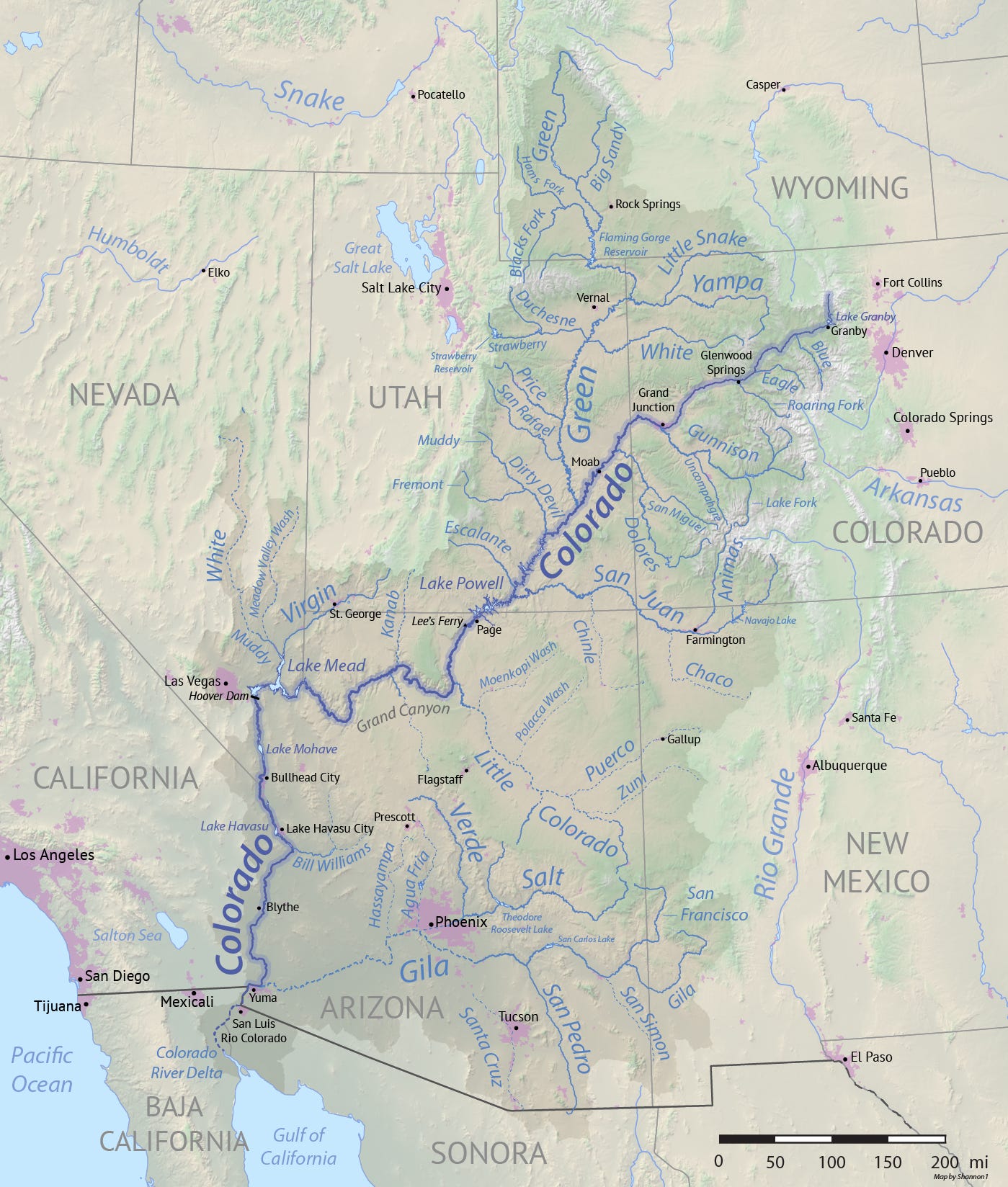
Occasionally, you come upon a class that points toward something bigger than any person or industry: something larger than any motivational speaker’s offer on a weekend retreat with millionaire clients. Occasionally, you encounter an instructor and a subject that everyone should be paying attention to but is too big for the industry to parse or understand. That was exactly what I experienced this week while in Colorado. I received a message about a class for professionals on the history of Colorado water and water law. Even though it conflicted with another presentation and meeting, I signed up immediately. When I arrived, I was greeted by an instructor (Carl Laffin) who, as the course revealed, had spent a lot of time preparing his lesson plan. Mr. Laffin was prepared to engage this multifaceted material from different angles.
The course felt like a history class or a documentary as much as a seminar on real estate water issues in the Southwest. Western water and water law are topics that impact every aspect of living in the region and serve as the foundational driver of real estate values in Colorado, Arizona, New Mexico, California, and Mexico.
The Colorado River is often called the ‘Lifeline of the Southwest,’ providing water to nearly 40 million people and supporting a $1.4 trillion economy. However, as of early 2026, those reliant on the river face a historic turning point due to extreme shifts in climate, changing water availability, and the coming expiration of century-old management agreements—principally the 1922 Colorado River Compact.
It was an illuminating, lightning-bolt class about a subject I intend to write about and produce videos on in the coming weeks and months.
# # #
The views and opinions expressed in this publication are strictly those of the author alone and do not necessarily reflect the official policy, position, or opinions of any employer, organization, or entity with which the author is affiliated. The content provided here is for informational and educational purposes only and does not constitute professional, legal, financial, or business advice. Readers should consult with a qualified professional before making any decisions based on the information provided in this newsletter.
thanks again....as a long term western resident, the water debacle facing the SW is imminently here. In 1971, I hiked into the wind rivers to WY highest peak to climb the seemingly vast Dinwoody
glacier field....it is nearly entirely gone now......
The map you offer shows clearly the origins of all that historical water. CO, WY etc. upriver and
historically have extensive water law rights and geographic advantages,.....however their population size and numerically weak political power ensures a hug nationalistic battle.
We are so fortunate to have you ,James, as a deep, concerned citizen far beyond the typical mono-theistic realtor more. Keep on sharing!!
ralph johnson ( NY,AZ, MT, WY)